


SEO The Business Optimizer
Search Engine Optimization (SEO) refers to the method used to increase a website ranking on search engine results pages...
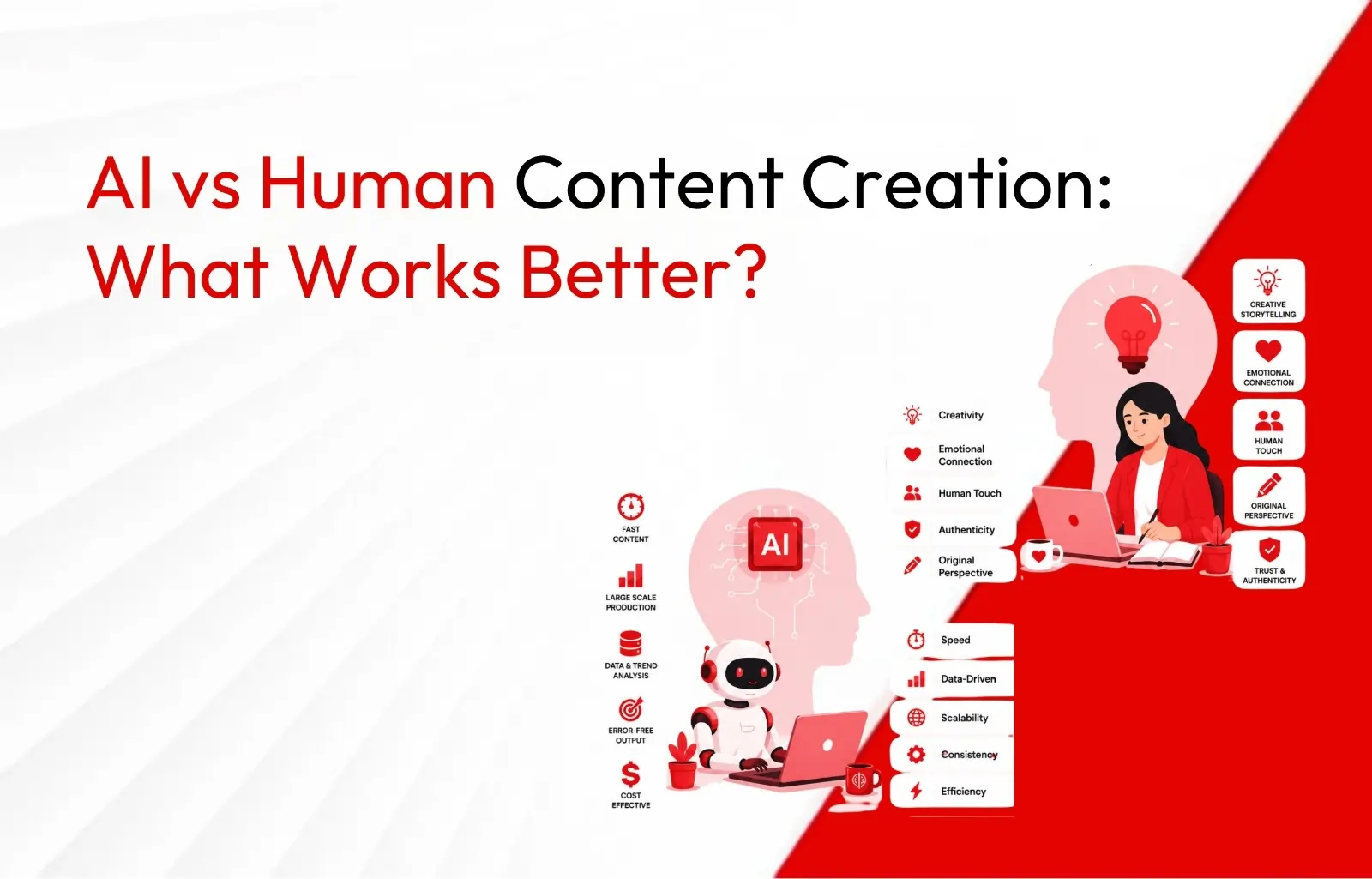
Content creation has changed dramatically in the last few years. What once depended entirely on human creativity, research, and writing skills is now being supported and sometimes replaced by artificial intelligence.
From blogs and advertisements to captions and emails, AI-powered tools can generate content in seconds. This has sparked a major debate across industries: can AI create content better than humans, or does human creativity still hold unmatched value?
The answer is not as simple as choosing one over the other. Both AI and human creators bring unique strengths to the table, and understanding those strengths is important for businesses, marketers, students, and creators who want to produce meaningful content in a competitive digital world.
Artificial intelligence has become one of the most powerful tools in modern marketing and communication. AI content generators can analyze huge amounts of data, identify patterns, and create structured content within moments. Businesses are using AI for blog writing, social media captions, product descriptions, customer support, and even video scripts.
The biggest advantage of AI is speed. A task that may take a human writer for several hours can often be completed by AI in minutes. This improves productivity and helps companies maintain consistent publishing schedules. AI tools are also useful for generating ideas, improving grammar, optimizing SEO, and summarizing information quickly.
Another reason AI content creation is growing rapidly is affordability. Small businesses and startups that may not have large content teams can use AI tools to reduce costs and produce content regularly. AI also works around the clock, making it a scalable solution for high-volume content needs.
However, despite these advantages, AI-generated content often lacks emotional depth and originality. While it can organize information effectively, it usually depends on existing patterns and data rather than personal experiences or genuine creativity. This is where human content creators continue to stand out.
Human content creation goes beyond words on a screen. People write from experience, emotion, culture, and personal understanding. Human writers know how to tell stories that connect with audiences emotionally, inspire trust, and create lasting impressions.
A human creator understands context in ways AI still struggles with. Humor, sarcasm, emotional sensitivity, and cultural nuances often require real human judgment. Readers can usually identify content that feels robotic or repetitive, especially when it lacks a natural flow or authentic voice.
Originality is another major strength of human writers. AI learns from existing data, but humans create imagination and lived experiences. A skilled writer can develop fresh perspectives, emotional narratives, and creative storytelling that make content memorable. This is especially important in industries like branding, journalism, entertainment, and thought leadership, where uniqueness matters more than speed.
Trust also plays a significant role. Audiences tend to value opinions, experiences, and insights that come from real people. A travel blog written by someone who has explored a destination feels more relatable than a generic AI-generated description. Similarly, personal stories, motivational writing, and opinion-based articles depend heavily on human authenticity.
At the same time, human writing has its limitations. Creating quality content requires time, effort, research, editing, and creativity. Human writers can experience burnout, creative blocks, and inconsistencies, especially when managing large volumes of work. This is one area where AI can provide valuable support rather than competition.
AI content tools are especially effective in tasks that require speed, structure, and data handling. In many industries, AI improves efficiency without completely replacing human involvement.
Some areas where AI performs exceptionally well include:
For businesses managing multiple platforms and tight deadlines, AI can become a valuable productivity partner. It helps reduce workload and allows teams to focus on strategy and creativity instead of repetitive tasks.
AI is also beneficial for multilingual communication. Translation tools powered by AI can help brands reach global audiences faster than traditional manual translation methods. Although human editing is still important for accuracy and tone, AI significantly speeds up the process.
Despite rapid advancements in technology, there are still many areas where human creators consistently outperform artificial intelligence.
Human writers are better at:
People naturally connect with content that feels real. A heartfelt speech, an inspiring blog, or a meaningful campaign often succeeds because of emotional intelligence rather than technical perfection. Humans can adapt tone, empathy, and storytelling based on situations that AI may not fully understand.
Another important factor is accountability. Human creators can verify facts, take responsibility for opinions, and ensure ethical communication. AI, on the other hand, may sometimes generate inaccurate or misleading information if not reviewed carefully. This makes human supervision essential, especially in industries like healthcare, education, law, and journalism.
The debate between AI and human content creation should not focus entirely on which one is better. Instead, the future of content lies in collaboration. AI works best when used as a tool that enhances human creativity rather than replacing it completely.
Many successful creators already use AI to improve efficiency while maintaining human originality. For example, a writer may use AI for research, outlines, SEO optimization, or editing, but still rely on personal creativity for storytelling and emotional engagement. This combination saves time while preserving authenticity.
Businesses are also discovering that audiences appreciate content that balances technology with human connection. AI can help create faster workflows, but human insight ensures that content remains meaningful, relatable, and trustworthy.
As technology continues to evolve, the role of content creators may shift from simply producing content to curating, editing, strategizing, and adding emotional depth. Human creativity will remain valuable because genuine connection cannot be fully automated.
AI has undoubtedly transformed the world of content creation. It offers speed, scalability, and efficiency that can support businesses and creators in remarkable ways. However, human creativity still remains the heart of meaningful communication. Emotions, originality, storytelling, and authenticity are qualities that technology has not fully replicated.
Rather than viewing AI as a replacement for human creators, it is more realistic to see it as a powerful assistant. The most effective content in the future will likely come from a balanced partnership between human intelligence and artificial intelligence. Companies like Evonix are already embracing this balance by combining innovative digital solutions with creative human-driven strategies to deliver impactful content experiences.
In the end, what works better depends on the purpose of the content. If the goal is speed and automation, AI performs exceptionally well. But if the goal is emotional connection, trust, and originality, human creativity continues to lead the way.
 Contact Us


