


SEO The Business Optimizer
Search Engine Optimization (SEO) refers to the method used to increase a website ranking on search engine results pages...
Imagine asking five different AI tools to create a marketing campaign for your business. Within seconds, you have five sets of headlines, social media captions, campaign ideas, and even visual concepts.
Impressive, isn't it?
Now imagine your competitors doing exactly the same thing. Suddenly, the question is no longer who can create content faster. It is who can create something people actually care about.
Welcome to the AI era, where technology has made content creation faster, information more accessible, and competition more intense than ever. Businesses can now automate tasks, personalise customer experiences, and generate marketing material at an unprecedented pace.
Yet, amidst this technological transformation, one fundamental business principle remains unchanged: people connect with brands, not just products.
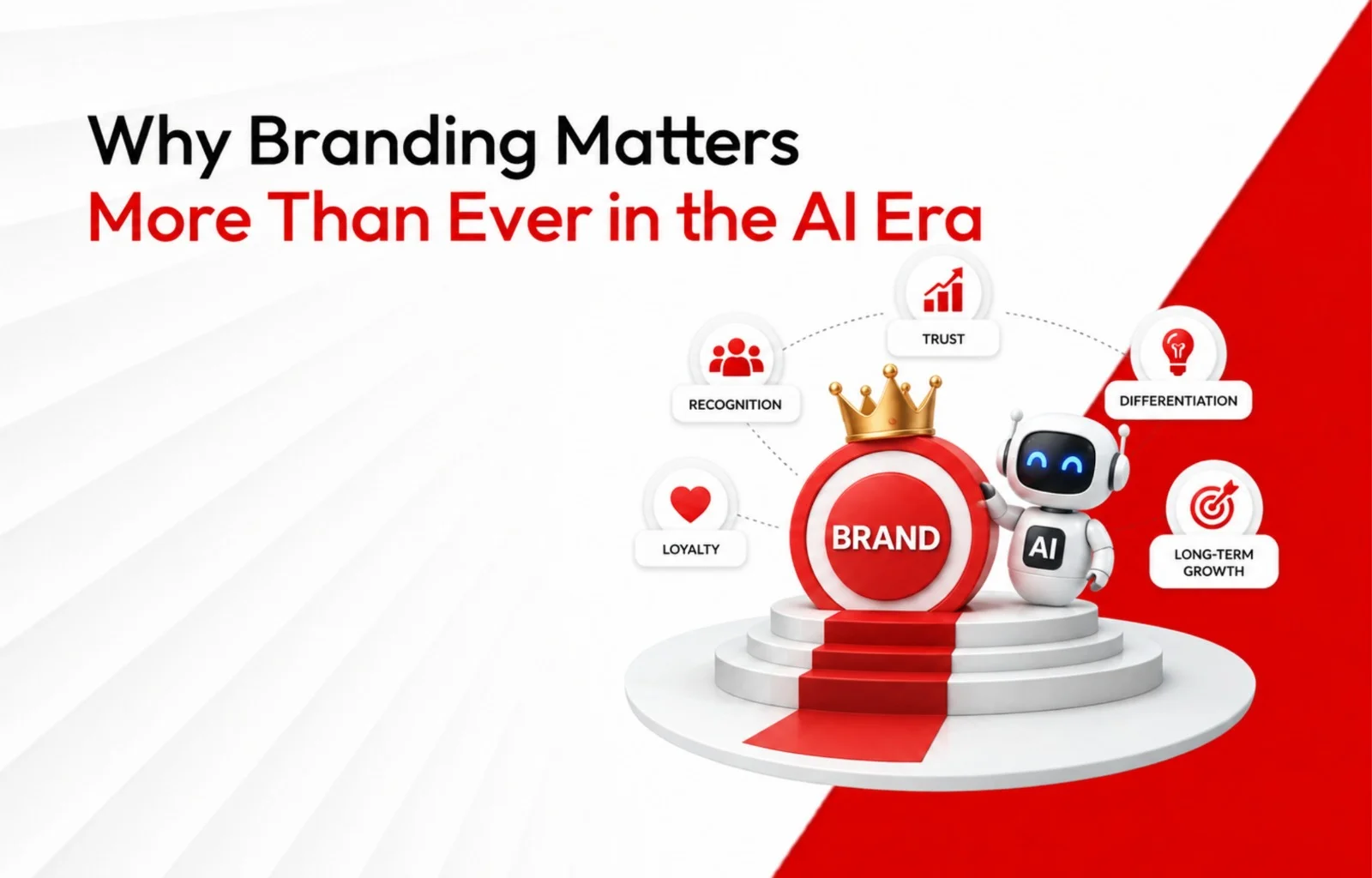
As artificial intelligence continues to reshape how businesses communicate, branding is becoming more than a visual identity or a catchy tagline. It is the personality, promise, and perception that distinguish a business in an increasingly automated world. And that is precisely why branding matters more than ever.
For years, creating professional marketing content required specialised skills, significant budgets, and considerable time. AI has changed that equation. Today, businesses of almost any size can generate polished presentations, advertisements, website copy, and visual content with a few prompts.
While this democratises creativity, it also creates a new challenge: sameness.
When multiple businesses use similar tools, templates, and prompts, their communication can begin to sound remarkably alike. A beautifully written caption or an attractive advertisement may capture attention momentarily, but it does not necessarily build recognition.
This is where branding takes center stage.
A strong brand gives every communication a distinct identity. It defines how a business speaks, what it stands for, how it looks, and the emotions it wants customers to associate with it. These elements create consistency across advertisements, websites, packaging, social media, and customer interactions.
Think about the brands you recognize instantly, even without seeing their logos. Their distinctive tone, colors, messaging, or personality has already established a place in your mind.
AI can help produce the content, but branding determines whether that content feels unmistakably yours. In an environment where content is abundant, a recognisable identity becomes a valuable competitive advantage.
The internet has always been crowded with information. AI has made that crowd significantly larger.
Customers are now exposed to an overwhelming volume of advertisements, recommendations, product descriptions, reviews, and AI-generated content. While this makes information easier to access, it also makes authenticity harder to identify.
Consumers are increasingly asking important questions before making decisions. Is this business credible? Can I trust its claims? Does it genuinely understand my needs? Will it deliver what it promises?
A well-established brand helps answer these questions.
Branding builds familiarity through consistent communication, transparent messaging, reliable experiences, and a clearly defined purpose. Over time, these elements create confidence, reducing the uncertainty customers often experience when choosing between similar products or services.
However, trust cannot be generated through attractive visuals. It must be supported by actual business behaviour.
For instance, a brand that communicates sustainability must demonstrate responsible practices. A business that promises exceptional customer service must deliver it consistently. The experience should reinforce the message, not contradict it.
AI can help brands respond faster, personalize communication, and improve customer support. But the foundation of trust still depends on honesty, accountability, and meaningful human experiences.
Ultimately, technology can make a brand more accessible, but credibility is what makes people believe in it.
One of the most significant opportunities AI offers businesses is personalisation.
Brands can analyse customer preferences, understand purchasing patterns, recommend relevant products, and deliver tailored communication across different touchpoints. This allows businesses to move beyond generic messaging and create experiences that feel more relevant to individual customers.
But personalisation without a clear brand identity can quickly become mechanical.
Imagine receiving a perfectly timed recommendation from a company whose values, personality, and purpose you do not understand. The message may be relevant, but the relationship remains transactional.
Now imagine receiving the same recommendation from a brand you recognise, trust, and have previously had positive experiences with. The interaction carries a different meaning.
That difference is branding.
Branding gives personalisation an emotional context. It ensures that every automated interaction reflects the company's personality and reinforces the relationship it wants to build with its audience.
For example, a premium hospitality brand and a budget travel platform may use similar AI tools to recommend destinations. Yet their communication styles, visual identities, customer expectations, and overall experiences should remain distinct. The technology may be identical. The brand experience should not be.
The strongest AI-powered brands will be those that combine data-driven precision with human understanding. They will use automation to make experiences more convenient while using branding to make those experiences more memorable.
In the traditional marketing landscape, visibility was a major objective. Businesses invested in advertisements, search rankings, social media campaigns, and other channels to ensure that customers discovered them.
In the AI era, visibility remains important, but it is only the beginning.
AI-powered search tools, recommendation systems, and conversational interfaces are changing how people discover information and evaluate products. Customers may encounter brand references through AI-generated summaries, personalised recommendations, or digital assistants rather than visiting a website directly.
This creates a new branding challenge: businesses must build an identity that remains recognisable across different platforms and interactions.
A brand cannot depend entirely on a single advertisement or social media trend. It needs a consistent presence supported by valuable information, distinctive messaging, and credible experiences.
Strong branding also helps businesses communicate what makes them different beyond product features or pricing.
Consider two companies offering similar services at comparable prices. One communicates only its features, specifications, and offers. The other consistently communicates its expertise, customer philosophy, purpose, and approach to solving problems.
Both may attract attention, but their brand perceptions develop differently.
This is why businesses should focus on two interconnected objectives:
AI can support both through content optimisation, audience insights, and campaign automation. However, recall ultimately depends on a coherent identity that customers can recognise and associate with a meaningful experience.
The AI revolution does not make branding less relevant. It changes what effective branding requires.
As businesses increasingly adopt automation, the most important question will not simply be how much technology they use, but how thoughtfully they use it to serve their customers.
AI can analyse data, generate ideas, streamline workflows, and support decision-making. It can help businesses operate more efficiently and communicate at scale. Yet the qualities that make brands meaningful remain deeply human: empathy, creativity, purpose, cultural understanding, and the ability to build relationships.
This is particularly important as customers become more familiar with AI-generated content. They may appreciate speed and convenience, but they still value genuine experiences, original perspectives, and communication that feels relevant rather than generic.
Brands must therefore establish clear principles for using AI. Their communication should remain authentic, their promises should be realistic, and their customer experiences should reflect the values they claim to represent.
The objective is not to choose between human creativity and artificial intelligence. It is to bring them together.
A business with a clear brand strategy can use AI to amplify its identity, reach the right audiences, and deliver consistent experiences. Without that foundation, even the most advanced technology risks producing communication that is efficient but forgettable.
The AI era has transformed the way businesses create, communicate, and compete. It has lowered barriers to content production, accelerated innovation, and opened new opportunities for customer engagement.
But when everyone can generate content, automate campaigns, and access powerful tools, the real differentiator is no longer simply what a business can produce. It is what people recognise, trust, and remember about it.
Branding provides that distinction. It gives businesses a voice in a crowded marketplace, builds familiarity in an increasingly digital world, and creates emotional connections that extend beyond individual transactions.
AI may change how brands operate, but branding determines what those brands stand for.
Because in a world where technology can create almost anything, the brands that matter will be the ones that make people feel something.
 Contact Us


