


SEO The Business Optimizer
Search Engine Optimization (SEO) refers to the method used to increase a website ranking on search engine results pages...
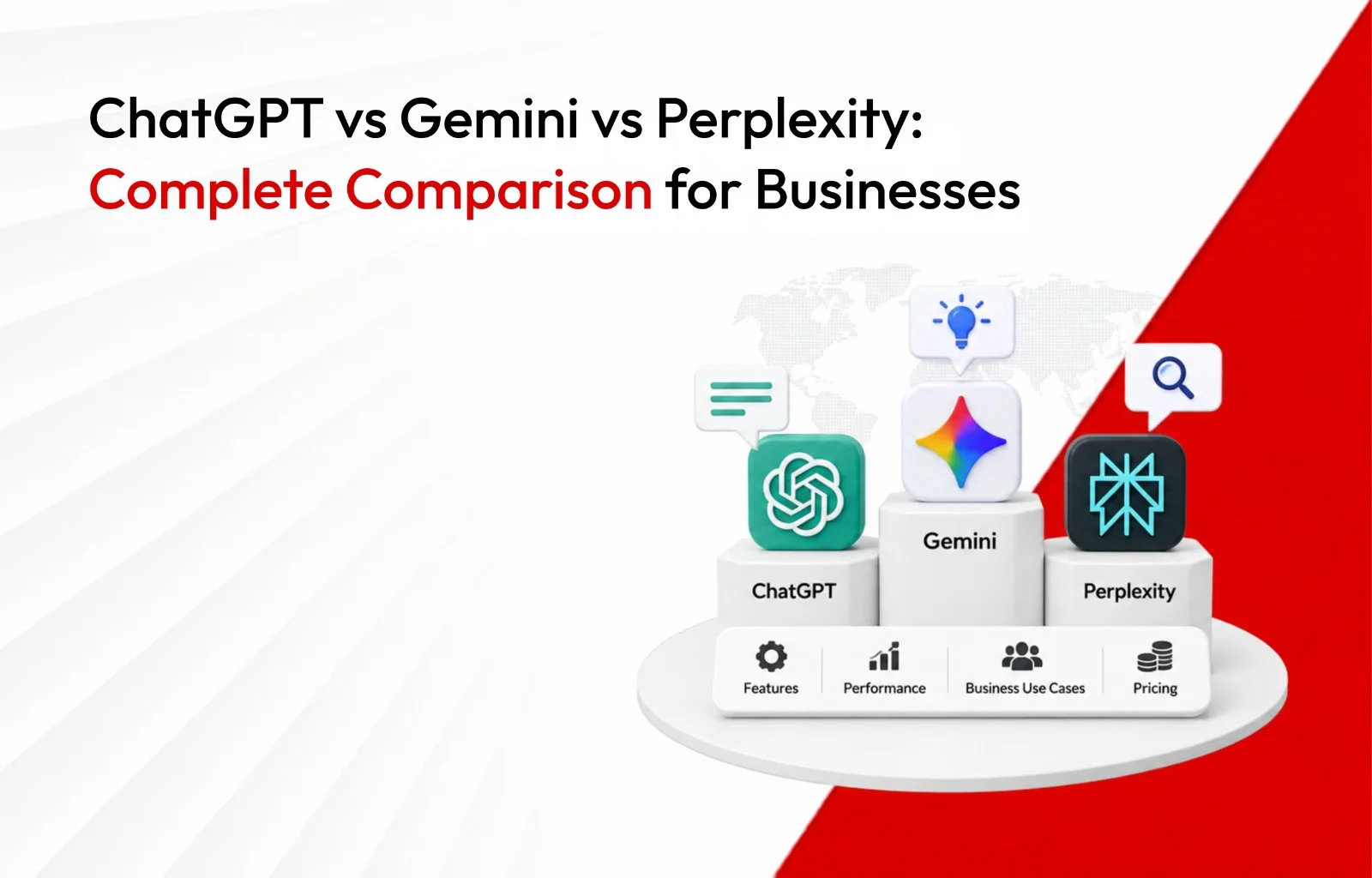
Artificial intelligence has quickly moved from being a futuristic idea to an everyday business tool. From drafting emails and creating marketing content to analysing data, conducting research and streamlining workflows, AI is changing how teams work.
Among the most popular AI platforms today are ChatGPT, Gemini, and Perplexity. While all three can answer questions, generate content, and assist with research, their strengths and business applications can be quite different.
So, when it comes to ChatGPT vs Gemini vs Perplexity, which one makes sense for your business? The answer depends on your goals, existing tools, team requirements, and the kind of work you want AI to handle.
At first glance, ChatGPT, Gemini and Perplexity may seem like three versions of the same thing. You enter a prompt, receive an answer and continue the conversation. But underneath that familiar experience, each platform has developed its own focus.
ChatGPT is a broad AI workspace designed for a wide range of business tasks. Teams can use it for content creation, brainstorming, data analysis, research, coding, document work and workflow assistance. Its conversational approach also makes it useful for refining ideas through multiple iterations rather than simply generating a one-time answer.
Gemini has a strong advantage for organisations already working within the Google ecosystem. Its integration across tools such as Gmail, Docs, Sheets, Meet and Drive allows businesses to bring AI assistance into familiar productivity workflows.
Perplexity takes a research-first approach. It combines conversational AI with search, making it particularly useful when businesses need to explore topics, gather information and review sources. Its citation-focused answers can be valuable for research-heavy tasks where knowing where information came from matters.
In simple terms:
The overlap is significant, but the way each tool fits into a business workflow is where the real difference appears.
For modern businesses, AI has become a useful creative partner. Marketing teams can brainstorm campaign ideas, content writers can develop first drafts, HR teams can prepare internal communication and sales teams can refine outreach messages.
ChatGPT is particularly flexible for creative and communication tasks. It can help generate ideas, write and rewrite content, create campaign concepts, summarise documents and adapt messaging for different audiences. The ability to maintain a conversation also makes it convenient for refining content through several rounds of feedback.
Gemini brings similar AI capabilities directly into Google's productivity environment. For teams that already use Google Workspace extensively, being able to work with AI within familiar applications can reduce the need to constantly switch between different platforms.
Perplexity, on the other hand, becomes especially useful before the writing begins. When a marketer needs to understand an industry, a content team wants to research a topic or a strategist needs to investigate competitors, its search-oriented experience can help gather information and identify relevant sources.
For businesses, this creates three slightly different approaches:
The best choice may depend on what happens most frequently inside your team.
Business decisions are increasingly driven by information. But having access to large amounts of data is only useful if teams can understand it quickly.
ChatGPT can assist with analysing datasets, identifying patterns, summarising findings and turning complex information into understandable insights. This makes it useful for teams working with reports, spreadsheets, customer information and business performance data.
Gemini approaches this from within Google's wider ecosystem. Businesses that already store information in Google Workspace can benefit from having AI capabilities connected to documents, spreadsheets, and other workplace information.
Perplexity takes a different route. Its strength lies in research and information discovery. When the question involves current information, industry developments, market research or multiple external sources, its search-oriented experience can make the research process more streamlined.
Think of a typical business research workflow:
Different AI platforms can support each stage, depending on the tools and data a business already uses.
The important point is that AI should not simply provide an answer. It should help employees find information faster, understand it better, and turn it into useful action.
Choosing an AI platform for a business involves more than comparing how well each tool answers a prompt.
When employees start using AI with company documents, customer information or internal data, organisations need to consider security, privacy, user access and administrative controls.
OpenAI's business offerings provide features such as SSO, MFA, user management and enterprise administration, with business data subject to specific privacy and data-use controls.
Google also provides enterprise controls around Gemini, including security and access management features designed for organisations using Google Workspace and other business systems.
Perplexity's enterprise offerings similarly include organisational controls, internal knowledge search, permissions and security features designed for business environments.
Before adopting an AI platform, businesses should consider:
An AI tool may be powerful on its own, but its real business value comes from how well it fits into the organisation's existing technology stack.
There’s no one-size-fits-all AI tool for businesses. ChatGPT, Gemini, and Perplexity each bring different strengths, so the right choice depends on how your team works and what you want AI to accomplish.
ChatGPT is a versatile choice for content creation, brainstorming, data analysis, strategy, automation and everyday business tasks.
Gemini is a natural fit for businesses already using Google Workspace, with AI integrated across tools such as Gmail, Docs, Sheets, Meet and Drive.
Perplexity is well-suited for research-driven workflows where finding current information and checking sources are key priorities.
Instead of asking “Which AI is the best?”, businesses should ask, “Which AI works best for this particular task?”
A marketing team may rely on ChatGPT for campaign ideas and copy, while a research team may turn to Perplexity for source-backed research. Teams deeply embedded in Google Workspace may find Gemini convenient for handling everyday productivity tasks.
Businesses can also use these platforms together, assigning each one to the workflows where it adds the most value.
ChatGPT, Gemini and Perplexity are no longer just AI chatbots. They are becoming broader productivity, research and business-assistance platforms.
ChatGPT offers a versatile environment for content, analysis and workflow support. Gemini brings AI closely into Google's productivity ecosystem. Perplexity focuses strongly on search, research and information discovery.
The right choice ultimately comes down to your business goals, existing technology and team requirements.
The real opportunity isn't simply choosing an AI tool. It's finding ways to combine AI capabilities with human expertise to reduce repetitive work, accelerate research, improve productivity, and give teams more time to focus on meaningful business decisions.
 Contact Us


