


SEO The Business Optimizer
Search Engine Optimization (SEO) refers to the method used to increase a website ranking on search engine results pages...
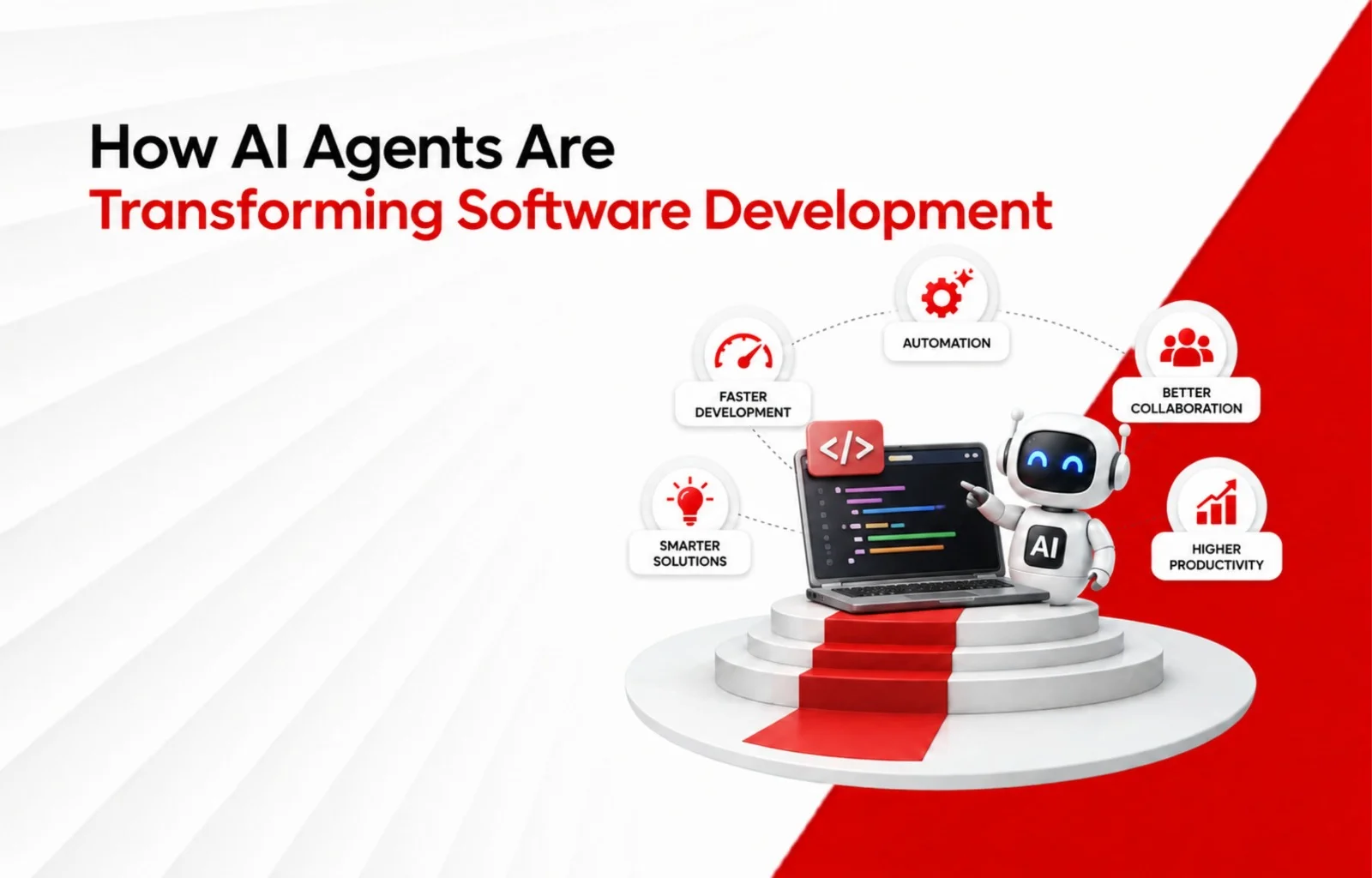
Software development has always involved a series of moving parts: understanding requirements, writing code, testing functionality, fixing bugs, and preparing applications for release. Now imagine having a digital teammate that can help manage several of these tasks, understand the goal behind them, and take action with minimal step-by-step direction. That is the promise of AI agents.
Unlike traditional AI tools that respond to individual prompts, AI agents can work through multi-step tasks, use available tools, evaluate results, and adjust their approach when needed. In software development, this opens up new possibilities for how teams plan, build, test, and maintain applications.
AI agents are not simply making coding faster. They are changing how developers interact with technology, how teams organise their workflows, and how software projects move from an idea to a working product. Their growing role signals a shift from AI as an assistant that provides suggestions to AI as a system that can actively contribute to the development process.
Traditional coding assistants are primarily designed to support developers with specific requests. They can suggest lines of code, explain functions, generate snippets, or help resolve errors. AI agents take this support a step further by working towards a defined objective.
For example, a developer may ask an AI agent to add a user authentication feature to an existing application. Instead of generating only a code snippet, the agent may inspect the project structure, identify relevant files, propose changes, write code, and run tests. Depending on the tools and permissions available, it may also help update documentation or flag areas that require human review.
This task-oriented approach can reduce the effort involved in moving between development activities. Developers spend less time switching between tools for routine tasks and more time reviewing decisions, refining requirements, and solving complex problems.
However, the value of an AI agent depends on the clarity of the task, the quality of the project context, and the safeguards built into the workflow. Developers still need to verify that generated code aligns with the application’s architecture, security requirements, and intended behaviour.
The shift is therefore not from developers to AI. It is towards a development process where human expertise and agent-driven execution work together.
Software development involves much more than writing code. Requirements must be translated into technical plans, features need to be implemented, tests must be conducted, and releases require careful coordination. AI agents can support several stages of this lifecycle.
During planning, an agent can help break a broad requirement into smaller tasks, identify dependencies, and prepare an initial implementation outline. During development, it can assist with repetitive coding, generate boilerplate structures, and suggest ways to resolve common errors. During testing, agents can help create test cases, run existing test suites, and summarise failures for developers to investigate.
They can also support maintenance by helping developers understand unfamiliar code, locate relevant functions, or document how a component works. This can be especially useful in large applications where understanding the existing codebase takes considerable time.
Consider a team working on a new feature for an established application. An AI agent could help review the relevant modules, identify where changes may be required, and prepare an initial implementation. Developers can then assess the proposed changes, test edge cases, and ensure the feature meets business requirements.
These capabilities can make workflows more efficient, particularly when tasks are repetitive or clearly defined. Yet speed alone is not the measure of successful development. Code quality, reliability, maintainability, and user experience remain essential. Agent-generated work must be reviewed and tested with the same care as code written by a human developer.
Testing and debugging are essential to building dependable software, but they can also consume significant development time. AI agents can help teams approach these activities more systematically by analysing code, identifying potential issues, and supporting repeatable testing processes.
An agent may examine a reported bug, trace the relevant code paths, suggest possible causes, and recommend changes. It can also help generate unit tests for specific functions or identify scenarios that existing tests may not cover. When connected to development tools, it may run tests and use the results to refine its proposed solution.
This creates an iterative workflow: the agent makes a change, checks the outcome, and responds to the results. Such a process can be useful for resolving straightforward issues and reducing the manual effort required for routine debugging.
AI agents can also assist with ongoing maintenance. They may help explain legacy code, identify outdated dependencies, prepare documentation, or support code reviews by highlighting patterns that deserve attention. For teams managing multiple applications, these tasks can help make maintenance more organised.
Still, an agent’s analysis is not a guarantee that software is secure or defect-free. It may overlook an issue, misinterpret the intended behaviour, or suggest a fix that creates a problem elsewhere. Human review, automated testing, security checks, and clear approval processes remain important, especially when changes affect sensitive data or critical systems.
AI agents are also influencing how development teams collaborate. Software projects often involve developers, designers, testers, product managers, and business stakeholders. Each group brings different information and priorities to the process.
An AI agent can help translate requirements into technical tasks, summarise discussions, prepare documentation, or explain technical concepts in more accessible language. This can reduce communication gaps and help teams maintain a shared understanding of project progress.
For developers joining an existing project, agents can provide explanations of code structures and key components. For experienced developers, they can help with repetitive work and provide an additional perspective when exploring possible solutions. For smaller teams, agent-supported workflows may make it easier to handle a broader range of development activities without adding the same level of manual effort.
These benefits depend on how agents are introduced into team practices. Organisations need clear guidelines about which tasks agents can perform independently, which actions require approval, and how generated work should be documented. Teams must also consider access controls, data privacy, intellectual property, and the handling of proprietary code.
The most productive use of AI agents is not necessarily to automate every task. It is to identify where they can reduce friction while preserving collaboration, accountability, and sound engineering judgement.
As AI agents become more capable, software development is likely to place greater emphasis on defining problems, setting constraints, reviewing outcomes, and making architectural decisions. Developers will continue to need strong technical foundations, but their workflows may increasingly include directing and evaluating AI systems.
This makes critical thinking more important, not less. Developers must assess whether an agent’s solution is appropriate, recognise when its assumptions are incorrect, and understand the implications of changes across an application. Knowledge of system design, security, testing, and user needs remains central to building reliable software.
Organisations adopting AI agents will also need to develop responsible practices. These may include limiting agent permissions, requiring human approval for high-impact changes, maintaining clear audit trails, and evaluating outputs through established quality standards.
A well-defined process helps teams benefit from automation without losing control over the software they deliver.
Ultimately, AI agents are transforming software development by extending automation beyond isolated code suggestions and into connected, multi-step workflows. They can help teams move through development tasks with greater continuity, support testing and maintenance, and improve access to technical information.
Their impact will depend on how thoughtfully they are integrated. When paired with human expertise, clear oversight, and strong engineering practices, AI agents can help developers spend less time on repetitive work and more time building software that solves meaningful problems.
 Contact Us


