


SEO The Business Optimizer
Search Engine Optimization (SEO) refers to the method used to increase a website ranking on search engine results pages...
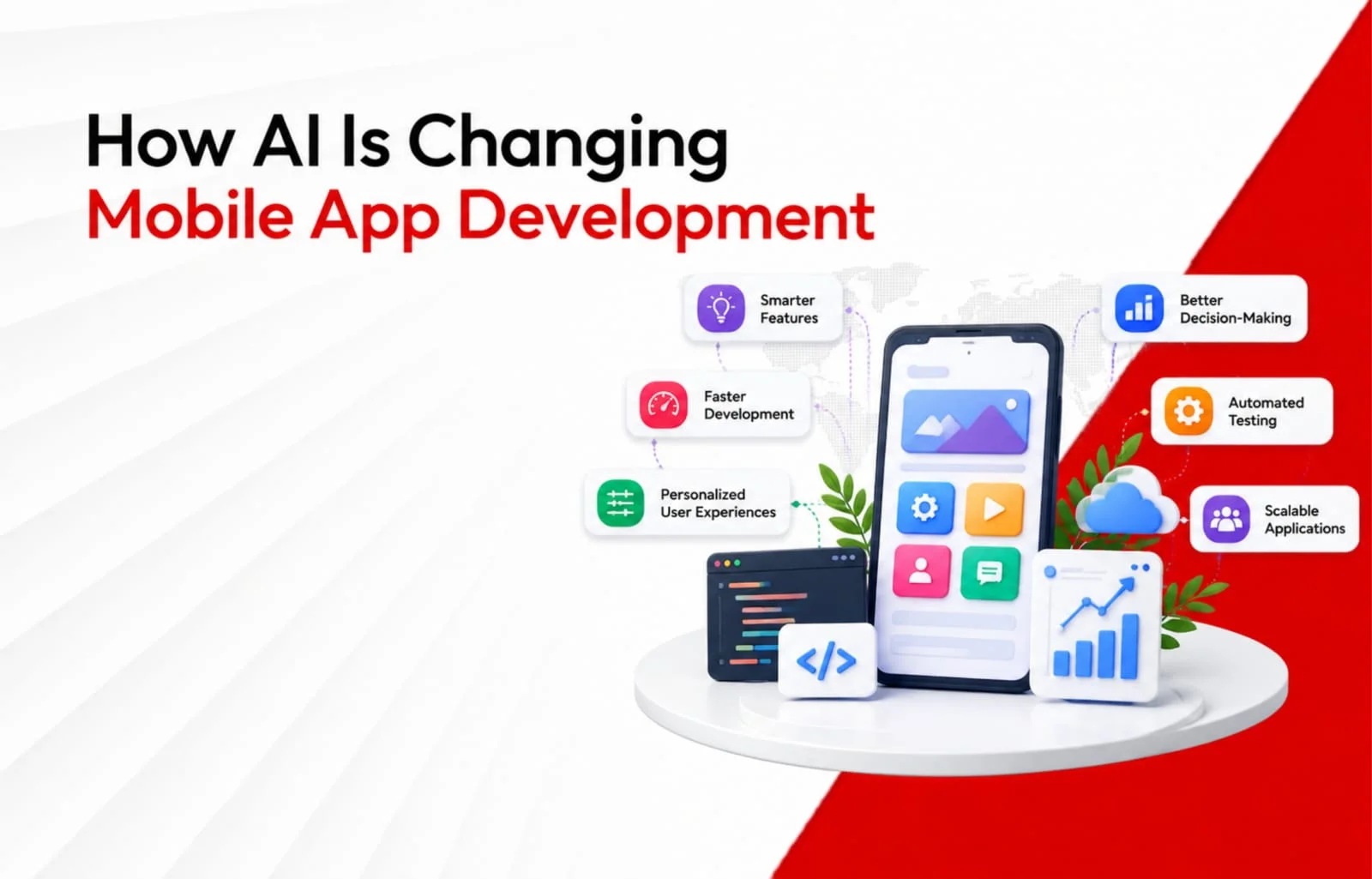
Remember when building a mobile app meant weeks of planning, endless lines of code, multiple rounds of testing, and a lot of coffee?
Today, artificial intelligence is changing that story.
AI is no longer something that belongs only in research labs or futuristic movies. It has become part of the everyday technology behind the apps we use, from personalised shopping recommendations and intelligent search to voice assistants and automated customer support. More importantly, AI is changing how those apps are created in the first place.
For developers, AI is becoming a powerful co-pilot. It can help write code, identify bugs, generate test cases, analyse user behaviour, and even suggest improvements to an app’s design and functionality. For businesses, this means faster development, smarter products, and more opportunities to create experiences that respond to what users actually need.
As mobile applications continue to become central to how people work, shop, communicate, learn, and entertain themselves, AI is set to play an even bigger role in their development.
So, what exactly is changing?
Traditionally, developers had to write and review large amounts of code manually. While programming expertise remains essential, AI-powered development tools are helping developers work faster and more efficiently.
AI can generate code snippets, suggest functions, identify potential errors, and explain complicated sections of existing code. Developers can describe what they want a particular feature to do, and AI tools can provide a starting point for implementation.
This does not mean AI is replacing developers. Instead, it is reducing repetitive work and allowing developers to spend more time solving complex problems.
For example, instead of manually creating a basic authentication function or writing repetitive code structures, a developer can use AI assistance to generate an initial version and then refine it according to the application's requirements.
The result is a shift in the development process. Developers can focus more on architecture, user experience, security, performance, and business logic while AI handles some of the more repetitive aspects of coding.
In simple terms, AI is helping developers move from writing every line to directing the development process more intelligently.
One of the biggest advantages of AI in mobile app development is speed.
Developing an app involves much more than writing code. Teams need to plan features, create interfaces, test different devices, identify bugs, optimise performance, and continuously make improvements.
AI can assist across several of these stages.
AI-powered tools can analyse requirements and help convert ideas into technical specifications. They can generate development suggestions, identify inconsistencies in code, and assist with documentation. Automated tools can also help developers test applications across different scenarios.
This can significantly reduce the time spent on repetitive tasks.
Imagine a developer working on an e-commerce application. Instead of manually creating hundreds of test scenarios for login, search, checkout, and payment flows, AI-powered testing tools can help generate and execute different test cases.
This allows teams to identify potential issues earlier in the development cycle.
Faster development can also help businesses respond more quickly to changing customer expectations. A new feature that might previously have taken considerable development time can potentially move from concept to testing much faster.
However, speed should never come at the expense of quality. AI-generated code still needs human review, testing, and validation. The strongest development teams will use AI to accelerate their workflow while keeping human expertise at the centre of decision-making.
AI is not only changing how apps are built. It is also changing what mobile apps can do.
Modern users expect applications to understand their preferences and provide relevant experiences. AI makes this possible by analysing patterns in user behaviour and turning those patterns into useful insights.
Consider a music streaming application. Instead of showing every user the same collection of songs, AI can analyse listening habits and recommend music based on individual preferences.
The same principle applies to shopping applications, fitness platforms, educational apps, travel services, and financial applications.
AI can help applications understand:
A typical AI-powered SaaS architecture may include:
Developers can use these insights to build more personalised experiences.
AI can also power features such as intelligent search, recommendation engines, predictive text, voice interaction, chatbots, image recognition, and natural-language interfaces.
This changes the relationship between users and applications. Instead of simply responding to commands, apps can increasingly anticipate needs and provide relevant assistance.
The future of mobile applications is therefore moving beyond functionality to intelligence.
An app is never truly "finished."
Once an application is launched, developers have to monitor performance, fix bugs, release updates, address security vulnerabilities, and adapt to new devices and operating systems.
AI can make this ongoing process more efficient.
AI-powered testing systems can identify unusual behaviour and help detect potential bugs. They can analyse large amounts of application data to identify patterns that might be difficult to spot manually.
Predictive analytics can also help development teams identify potential performance issues before they become major problems.
Security is another area where AI is making an impact. AI systems can analyse activity and detect unusual patterns that could indicate suspicious behaviour. While AI is not a substitute for robust cybersecurity practices, it can provide development teams with another layer of monitoring and analysis.
Maintenance can benefit as well. Instead of waiting for users to report every issue, AI-driven monitoring can help teams identify problems based on application behaviour and performance data.
For businesses, this can translate into better reliability, quicker issue resolution, and a smoother user experience.
The most interesting future of mobile app development may not be about AI replacing developers. It may be about developers becoming more capable because of AI.
AI can generate code. It can analyse data. It can identify patterns. It can automate repetitive processes.
But it does not replace the need for human understanding.
Someone still needs to determine what problem the app should solve. Someone needs to understand the target audience, define the product strategy, make design decisions, consider ethical implications, protect user data, and ensure that the final experience actually makes sense.
This is where human creativity and AI capabilities can complement each other.
Developers who learn how to work effectively with AI tools can potentially build faster and experiment more freely. Businesses can test ideas sooner, personalise experiences more effectively, and respond to users with greater agility.
At the same time, the rise of AI brings important questions around data privacy, security, bias, intellectual property, and the reliability of AI-generated outputs. These challenges mean responsible development will become just as important as technical innovation.
AI is changing mobile app development from the ground up.
It is helping developers write and test code faster, enabling more personalised experiences, improving application monitoring, and opening the door to capabilities that were once difficult to implement.
But the real opportunity lies in how these technologies are used.
The winning applications of tomorrow will not simply be the ones that have AI features. They will be the ones that use AI thoughtfully to solve real problems, simplify experiences, and create genuine value for users.
Mobile app development is entering a new chapter, and AI is becoming one of its most powerful tools.
The question is no longer whether AI will influence the future of mobile apps.
It is how intelligently we choose to build that future.
 Contact Us


